This prompt turns a flat or hanger photo of your garment into a catalogue photo: one model, full length, on a plain backdrop, wearing that garment with its buttons, pockets and trims where they really are. It is the picture a product page needs and the one small labels most often go without.
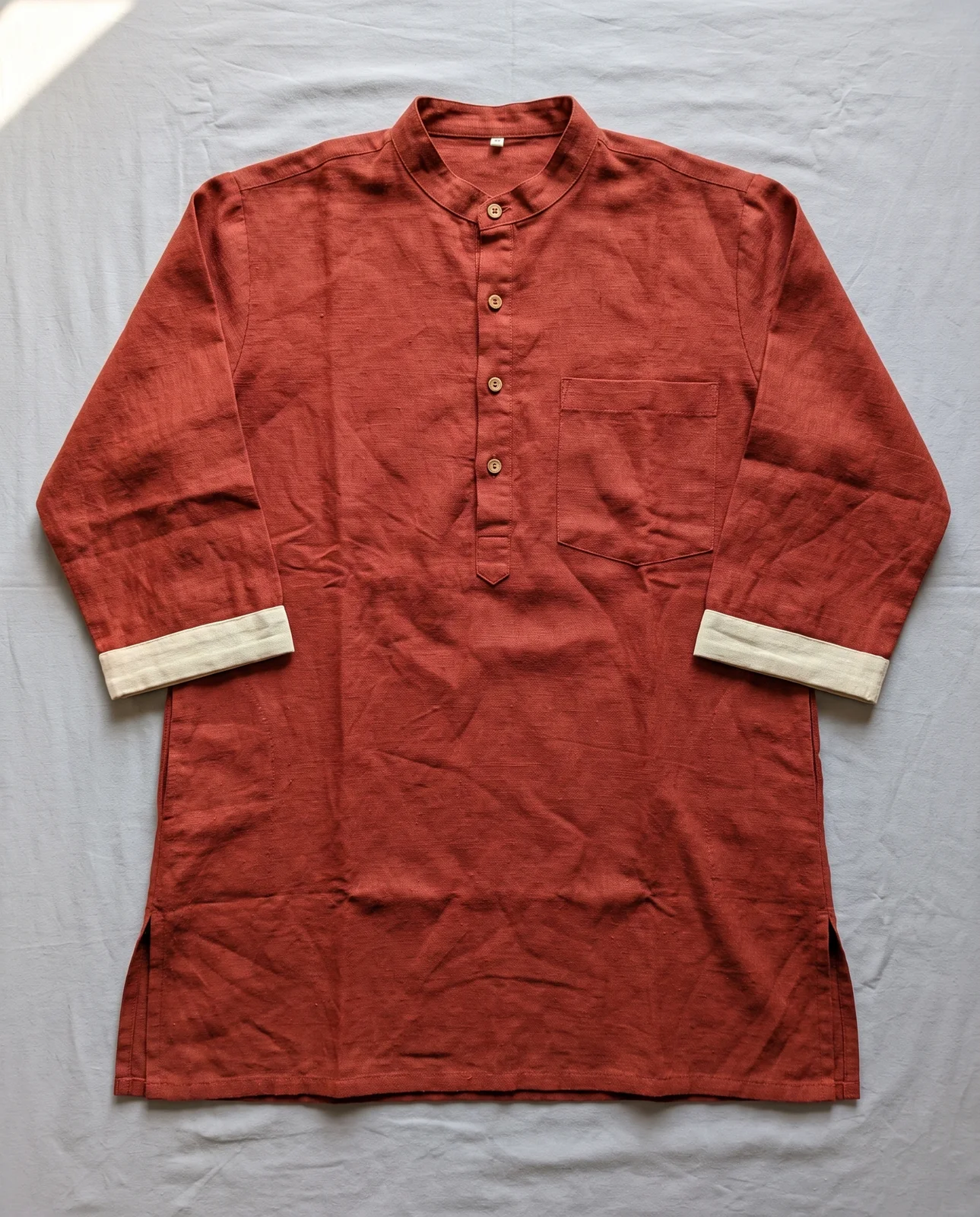
You need one clear photo of the garment, laid flat or on a hanger, in daylight, with the whole piece in frame. Attach it first, fill the blanks and paste. It works in Nano Banana Pro in Google AI Studio, in the Gemini app and in ChatGPT. It is written for a top, a kurta or a dress; for trousers or a skirt, change "sitting on the shoulders" to "sitting at the waist".
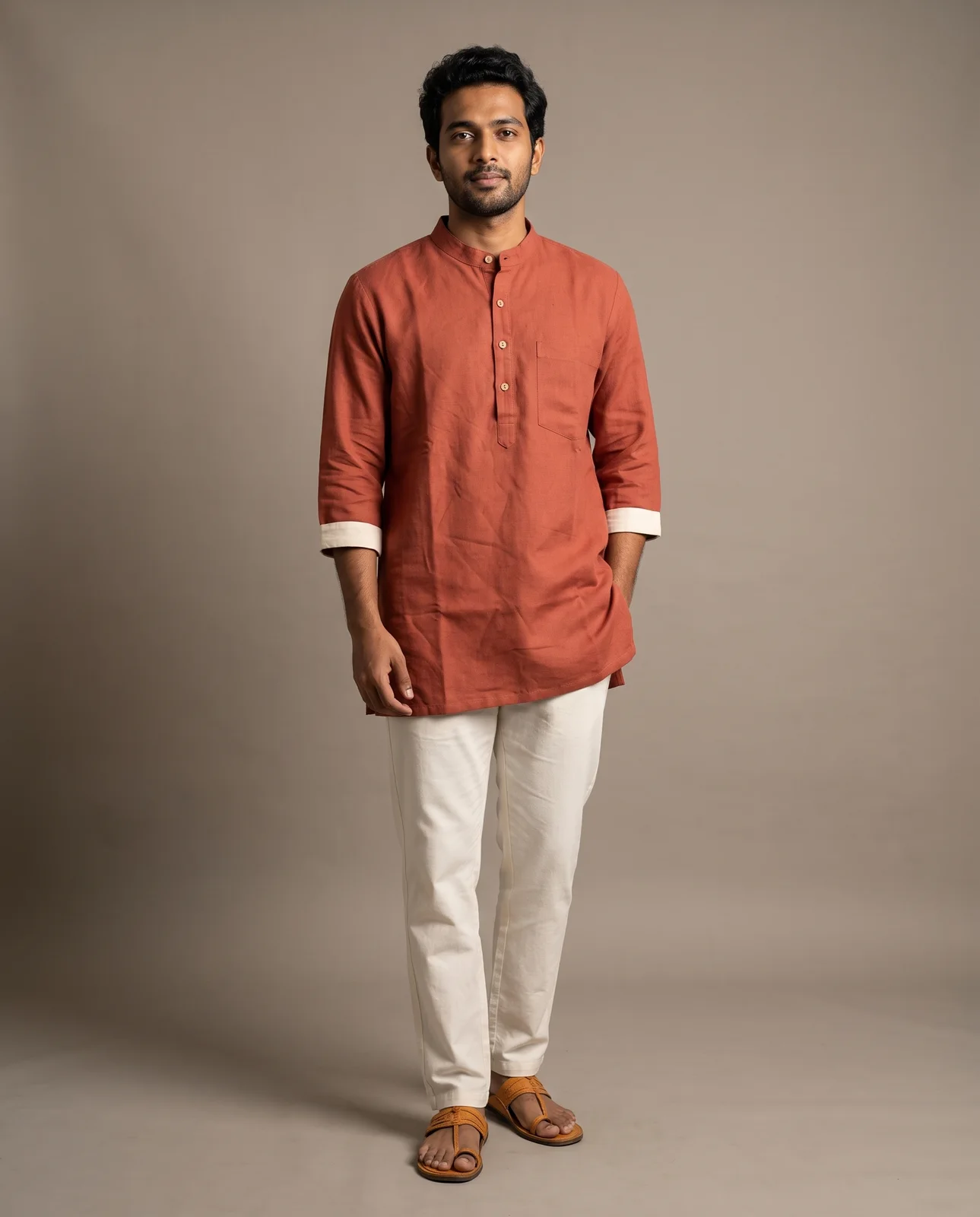
The line doing the most work names the details and asks for the same number in the same places. In our test the kurta came back with its four buttons, its pointed and its pocket on the correct side. The first run also drew a bounce board at the edge of the frame, because we had named one, so the version below describes the light by what it does.
The prompts
01The promptText Image 1 is a photo of our garment: [GARMENT, WITH ITS MAIN DETAILS]. Make a catalogue photo of a model wearing this exact garment. Keep the garment exactly as it is in image 1: the same colour, fabric and weave, the same cut and length, the same collar, buttons, pockets, cuffs, stitching and trims, in the same places and the same number. Add nothing to it and take nothing away, and put no logo, label or print on it that is not in the photo. It should fit the way this cut fits a real body: sitting on the shoulders, falling with the weight of the fabric, with soft creases at the elbows and waist. Photographed on a Sony A7 IV with a 50mm lens at f/4, full length, camera at waist height, against a seamless [BACKDROP COLOUR] paper backdrop that fills the frame from edge to edge. Lit by one large soft light from the front left, the shadow side gently filled, with a soft shadow on the floor behind the feet. Vertical 4:5 frame, the whole figure in it with space above the head and below the feet. The model is a [WOMAN OR MAN] in [AGE RANGE] with [SKIN TONE AND UNDERTONE] skin and [HAIR], standing easy with the weight on one leg, one hand relaxed at the side and the other [WHAT THE OTHER HAND DOES], looking into the lens. Styled with [WHAT ELSE THEY WEAR, AND SHOES], plain and in colours that sit quietly beside the garment. Real skin with its texture, relaxed hands with a thumb and four fingers each, a natural face with slight asymmetry. True colour under neutral white light, so the garment matches image 1. Leave out studio lights, stands and reflectors, text, logos, watermarks, props, jewellery and other people.Attach the garment photo first, then paste into Nano Banana Pro in Google AI Studio, the Gemini app or ChatGPT.
02As we ran it, for an invented linen kurtaText Image 1 is a photo of our garment: a rust linen short kurta with a mandarin collar, four wooden buttons, cream cuff bands and one chest pocket. Make a catalogue photo of a model wearing this exact garment. Keep the garment exactly as it is in image 1: the same colour, fabric and weave, the same cut and length, the same collar, buttons, pockets, cuffs, stitching and trims, in the same places and the same number. Add nothing to it and take nothing away, and put no logo, label or print on it that is not in the photo. It should fit the way this cut fits a real body: sitting on the shoulders, falling with the weight of the fabric, with soft creases at the elbows and waist. Photographed on a Sony A7 IV with a 50mm lens at f/4, full length, camera at waist height, against a seamless warm grey paper backdrop that fills the frame from edge to edge. Lit by one large soft light from the front left, the shadow side gently filled, with a soft shadow on the floor behind the feet. Vertical 4:5 frame, the whole figure in it with space above the head and below the feet. The model is a man in his late twenties with warm wheatish-brown skin with an olive undertone and short, slightly wavy black hair and a close-trimmed beard, standing easy with the weight on one leg, one hand relaxed at the side and the other in a trouser pocket, looking into the lens. Styled with straight off-white cotton trousers and tan leather sandals, plain and in colours that sit quietly beside the garment. Real skin with its texture, relaxed hands with a thumb and four fingers each, a natural face with slight asymmetry. True colour under neutral white light, so the garment matches image 1. Leave out studio lights, stands and reflectors, text, logos, watermarks, props, jewellery and other people.Run in Nano Banana Pro at 2K with one flat-lay photo attached. Buttons, placket, cuffs, pocket and side slits all came back as they were.
Checklist
Check this before the photo goes on the product page
- Count every button, pocket, pleat and trim against your own photo.When a model redraws a garment it adds a button or drops a trim without being asked. Naming the details in the prompt is what kept our kurta at four buttons.
- Check that pockets and anything one-sided are on the same side as on the real garment.A flat lay shot from above is easy to mirror, and a pocket on the wrong side is a different garment.
- Hold the real garment beside the screen in daylight and compare the colour.Colour drifts warmer or brighter in a studio scene. Rust that turns orange is a complaint waiting to happen.
- Check where the hem falls on the body and where the sleeves end.Customers judge length from the model. If the picture is longer or shorter than the real piece, the size guide stops meaning anything.
- Look at every hand: a thumb and four fingers, relaxed, about as long as the face.Hands are where these pictures fail most often, and a customer notices a wrong hand before a wrong button.
- Check the edges of the frame for studio kit, props or stray text.Our first run drew a bounce board, because the prompt named one. Describe the light by what it does, not by the equipment.
What to do it with
- Google AI StudioFree tier, paid above it
Where Gemini API keys, projects, billing and spend caps are made, with a playground for the models.
Bad at Free-tier prompts are used to improve Google's products, and the billing screens changed several times in 2026.
- GeminiFree tier, paid above it
Google's assistant, with a very long context window and tight links to their other products.
Bad at Behaviour changes between the app, the API and the versions inside other Google products.
- ChatGPTFree tier, paid above it
General assistant with image generation, data analysis and web access in one window.
Bad at Its default voice has become recognisable enough that readers now spot it, which is a brand problem if you ship it unedited.
The words, in plain language
- Flat lay
- A garment laid flat and photographed from directly above. Easy to shoot at home, and enough for the model to copy the details from.
- Placket
- The strip of fabric that holds the buttons down the front. Its length, its end and its number of buttons are the details models most often change.
Why it matters
A catalogue photo is a promise about the parcel. Check the picture against the real garment, not only against the photo you uploaded, and never let the picture flatter the fit. A kurta that is longer or better cut on screen than in the box has sold a return.
- Type
- technique
- Period
- ongoing