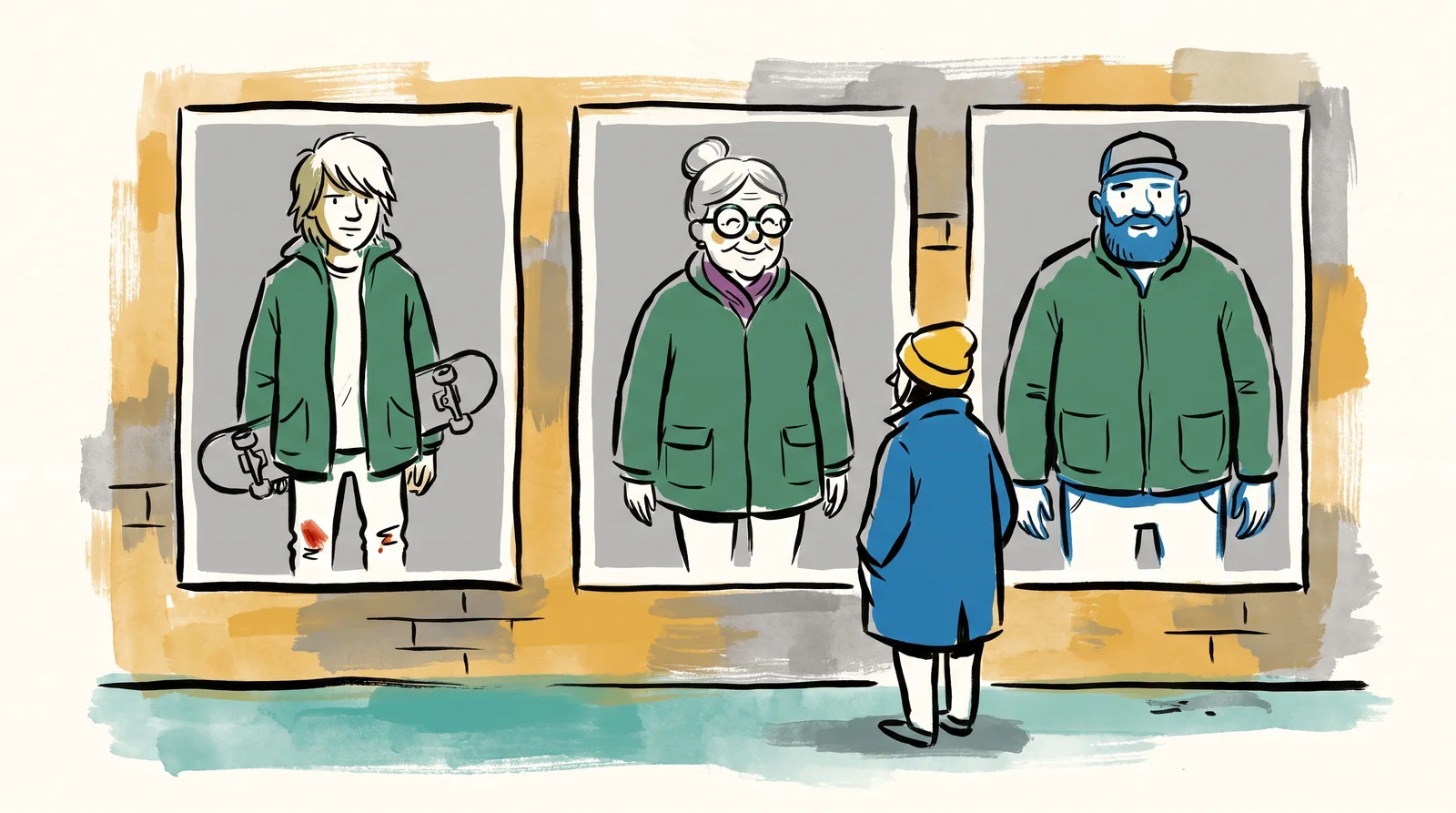
is choosing who appears. It says more about a brand than its palette, its typeface and its tone of voice put together, and it is usually decided last, in a hurry, from a folder of agency cards. Who is in the frame is what the audience actually . A viewer takes in a face before a headline, a logo or a product, and decides from it who the picture is for and whether that includes them.
That judgement is fast. In 2006 the Princeton psychologists Janine Willis and Alexander Todorov showed people photographs of unfamiliar faces for a tenth of a second and asked them to rate each face for attractiveness, likeability, trustworthiness, competence and aggressiveness. Their ratings closely matched the ones other people gave when they could look for as long as they liked, and the extra time mostly made people more confident in a judgement they had already made. Your casting is read in that tenth of a second, long before anybody reads your copy. Whatever the face says in that moment, the brand has said too.
The decision underneath every casting is whether you are showing people your customer wants to be or people your customer recognises. is the older route. A fragrance campaign built around a film star sells a life the viewer will never live, and the distance is part of what it sells. shows the audience itself, or somebody close enough that the viewer thinks that could be me, and brands choose it less often than it deserves. Both are legitimate. Mixing them produces an advertisement that is plainly talking to nobody in particular, such as a model with catwalk looks in an ordinary kitchen doing an ordinary chore, who reads as neither the dream nor the neighbour.
Dove's Campaign for Real Beauty is the best-known recognition casting in advertising. Launched by Unilever in 2004 with the agency Ogilvy, its first billboards went up in Germany and Britain and showed women who were not professional models, photographed by the portrait photographer Rankin, with an invitation to passers-by to vote on whether each woman was, for example, wrinkled or wonderful. The casting was the idea. The same billboards with professional models would have said the opposite of what Dove meant, however the copy had been written. That is what it looks like when casting decides a brand, and it is why the choice of who appears belongs in the first meeting about a campaign instead of the last.
On a real job, casting runs through a sequence of steps. Each one narrows the field. The art director writes a casting brief describing a character, such as somebody who looks as if they have just come in from a long walk and is pleased about it, and sends it to a or to model agencies. Candidates come back with a portfolio of their best work and a set of , the plain unretouched photographs that show what the person actually looks like. A shortlist is called back to be seen on camera and given a note. Dates are held with options, then confirmed, and the , meaning where and for how long the pictures may run, is agreed in writing before anybody arrives on set.
Casting speaks across a body of work as well as in a single frame. A brand that casts one kind of face for fifteen years has told its audience something about who it is for, and the fact that nobody decided it does not stop it being a message. Audiences notice the pattern. A skincare brand that has only ever shown women in their twenties has told every older customer that its products are not for her, even if nobody in the building believes that. This is where brands most often say something they never intended. Every face in every campaign adds to the same account, so the question for each new shoot is what this person adds to the story the earlier pictures have already told.
A real case
The same adverts, cast twice
Apple and its agency TBWA\Media Arts Lab, Get a Mac · 2007
What they did
Apple's Get a Mac adverts stood two men against a white background, one introducing himself as a Mac and the other as a PC. In the United States the Mac was the actor Justin Long and the PC was the writer and humorist John Hodgman. For Britain the ads were adapted closely from the American ones and recast with the comedians Robert Webb as the Mac and David Mitchell as the PC.
What happened
British viewers already knew the pair from the sitcom Peep Show. Writing in the Guardian in February 2007, Charlie Brooker noted that the only real difference from the American campaign was the casting, and that in Peep Show Mitchell plays "a repressed, neurotic underdog" and Webb "a selfish, self-regarding poseur". So, he argued, the ads left you thinking PCs were a bit rubbish but lovable, and Macs were smug.
What to take from it
An audience reads a face with everything it already knows about that face. Before you cast somebody well known, write down what people will bring to the frame from their other work, and check it says what the brand means to say.
What to do it with
- ClaudeFree tier, paid above it
A language model that writes, edits, reads long documents and runs tools, including agents that work inside a codebase.
Bad at It is agreeable by default, so it will improve a bad idea instead of telling you it is bad. Ask it to argue against you and the quality of the answer changes.
- Are.naFree tier, paid above it
Collecting and connecting references in channels, with no feed and no algorithm.
Bad at Deliberately slow and unsocial. That is the point and it is also why teams abandon it.
- FigJamFree tier, paid above it
A whiteboard next to the design files, for workshops, maps and the argument before the work.
Bad at A workshop board is a record of a conversation, not a decision. Somebody still has to write the decision down.
The words, in plain language
- Casting
- Choosing who appears. The single most consequential decision in most image work.
- Read
- What a face communicates before anybody thinks about it, such as age, class, warmth or distance.
- Aspiration
- Casting somebody the audience wants to be. One strategy, and not the only one.
- Recognition
- Casting somebody the audience already is. Frequently stronger, and chosen less often.
- Casting director
- The specialist who finds and shortlists people from a brief, through agencies, the street and their own contacts.
- Digitals
- Plain, unretouched photographs of a person in ordinary clothes. They show what will actually arrive on the day.
- Usage
- Where, for how long and in which countries the pictures of a person may run. Paid for separately from the day.
Why it matters
The commonest mistake is leaving casting until last. The palette, the set and the styling get weeks of discussion, and then the people are picked from agency cards the week before the shoot by whoever has a free afternoon. That order is backwards. Everything else ends up built around a face nobody chose on purpose. Casting done well takes days and costs money, and it is the decision most likely to make or break the pictures you are spending the rest of the budget on, so it needs a place in the plan from the first week.
The second is casting for looks when the picture needs behaviour. A face that photographs beautifully in a portfolio may not be able to hold a natural half-smile for four hours, laugh on cue or hold a product as if they use it every day. On the shoot day that shows up as frames that are technically perfect and feel false. Retouching cannot fix it. See people move and respond to a note before you book them, because an uncomfortable person looks uncomfortable in every frame.
The third is forgetting what a face brings with it. A well-known person arrives with every role and headline the audience remembers, and a person the category has used a hundred times arrives looking like the category. The money catches people out as well. The fee for the day is often the smallest number in the quote, and the usage can cost several times more, so a frame the client loves is worth nothing once the rights on it have run out.
The module follows the job in order. It starts with writing a brief that describes a person instead of a list of measurements, then covers finding people on the street and through agencies, including how options and bookings work. It shows how to read a portfolio against a plain polaroid and how to run a callback. Then it turns to the money, meaning usage, exclusivity, buyouts and the rates that surprise people, before covering representation without tokenism, the licences that children and animals need, and casting a face that has been generated.
Activity
Trace fifteen years of faces on one homepage
Casting speaks across a body of work, and the Wayback Machine keeps old copies of most brand websites. Choose a brand in or near your own brand's category that has always put people on its homepage, such as a skincare company if you are following No. 4, and look at who it showed every few years. The faces add up to a message. Write down what that message has been telling customers about who the brand is for.
Open the Wayback Machine- 01Type the brand's web address into the search box and open the capture nearest January in 2010, 2014, 2018 and 2022, then the live site today.
- 02Screenshot the first person you see on each page, or note that there was nobody.
- 03Beside each screenshot, write whether the person reads as aspiration or recognition, the two routes this lesson describes.
- 04Mark any year where the brand mixed the two, such as a catwalk face doing an ordinary chore.
- 05Write one paragraph on who has never appeared in any of the five, and what that customer would take from it. Then write one line on who your own shoot must not leave out.
Done when Five dated screenshots of one brand's homepage, a paragraph on who its casting has welcomed and who it has left out, and the first line of your own casting brief./Time 40 minutes
Elsewhere
- Type
- term
- Period
- ongoing