A decides what appears in the frame and makes it sit correctly. On a person that means choosing the clothes, the shoes and the jewellery, and then clipping, pinning, steaming and taping until something that fits nobody perfectly fits this person in this frame perfectly. On a table it means choosing the bowl, the cloth, the surface and the spoon, and placing each one so the product reads first. The job starts weeks before the shoot and ends days after it. Most clients see only the middle.
There are several kinds of stylist. A wardrobe or fashion stylist chooses and fits clothing, and on a magazine the same person is often titled . A prop stylist sources and arranges objects and surfaces, and a food stylist makes food look right under studio lights for as long as the shot takes. Hair and make-up are separate crafts with their own artists, and a costume designer, who dresses characters for film, television or theatre, does a different job again. A small product shoot with no people in it still needs a prop stylist, because the difference between a flat lay that looks composed and one that looks like objects put down on a table is most of why one brand's pictures look expensive.
At the top of the craft a stylist is an author of pictures, working as the photographer's partner. Grace Coddington, who joined American Vogue in 1988 as fashion director and was its creative director from 1995 to 2016, was known for big, elaborate shoots, and the 2009 documentary The September Issue follows her and the editor Anna Wintour through the making of the September 2007 issue, with Coddington arguing for her stories and Wintour approving most of them in the end. In London between 1983 and 1989 the stylist Ray Petri worked with photographers including Jamie Morgan and Marc Lebon on a run of fashion spreads for The Face, i-D and Arena under the name Buffalo. In both cases the look was as much the stylist's as the photographer's. So brief a stylist as a collaborator.
Most of the work comes first. The stylist reads the brief and the references, works out the looks, and sources everything, which means buying some things and borrowing the rest from showrooms and press offices. Designers lend to the fashion press in the four to six months before the clothes reach the shops, and samples are usually made in a single size, which is why casting and styling constrain each other. Everything borrowed is logged on arrival with where it came from, when it goes back and what condition it was in. Then comes the , an hour with the actual model in which every look is tried on, clipped, photographed plainly and approved or replaced.
On the day, the stylist dresses the model for each look and then stays at the monitor, watching the clothes while you watch the picture. Almost nothing fits straight off the rail. The back of a photographed jacket is usually a mess of clips while the front is perfect, which limits the camera angles, as the lesson on fit explains. Between takes the stylist steams out creases, straightens a twisted strap and checks each look against the photographs from the fitting. A fault caught between frames takes seconds. Found in the edit, it costs a retoucher's time, or the frame.
The job ends when the last borrowed thing is back where it came from. go out on the agreed dates, credits go to the publication wherever a loan was made in exchange for one, and anything damaged is paid for. Stylists charge by the hour, the day or the project, and advertising usually pays better than editorial, which is why a magazine story and a campaign by the same stylist can cost very different sums. Budget for the days either side too. Pulling and returning are real working days, and a disorganised stylist is a bigger cost to a production than an untalented one, since a lost sample or a late return comes out of the budget and the studio's name at once.
Worked example
Work with a stylist on a one-day shoot
- 01Book the stylist as soon as the shoot is confirmed, and send the brief, the shot list and the references, with a note on what each reference is for.Sourcing takes days. A stylist briefed two days out can only bring what is already to hand.
- 02Agree the styling budget in three parts, meaning what will be bought, what will be borrowed, and a sum held back for damage and loss.Borrowed things come back marked more often than anybody plans for, and the damages line is the one people forget.
- 03Ask to see the options as photographs a few days before, and approve or cut them there.Choosing between six jackets on a screen takes minutes. Choosing on set takes an hour of the whole crew's time.
- 04Hold a fitting on the actual model, photograph every look plainly, and agree the order the looks will be shot in.Fit problems and slow changes surface here, while there is still time to replace a garment.
- 05On the day, keep the stylist at the monitor beside you, with licence to stop a frame for a twisted strap or a lifted collar.You are watching the picture and they are watching the clothes. A fault caught between frames takes seconds, and the same fault found later costs a retoucher or the frame.
- 06Photograph each look before the first frame and again after every break.Sleeves get rolled and necklaces turn round over lunch. Nobody notices until two frames sit side by side.
- 07At the wrap, check every item against the list, photograph its condition and confirm the return dates before anybody leaves.Showrooms lend on trust and keep records, and a studio that returns things late stops being lent to.
What to do it with
- MilanoteFree tier, paid above it
A board where images, notes and links sit together, built for the messy early stage.
Bad at Boards get big and stop being readable. It has no opinion about editing.
- ClaudeFree tier, paid above it
A language model that writes, edits, reads long documents and runs tools, including agents that work inside a codebase.
Bad at It is agreeable by default, so it will improve a bad idea instead of telling you it is bad. Ask it to argue against you and the quality of the answer changes.
- Capture OneSubscription
Raw processing and tethered capture, with colour handling professionals prefer to the alternative.
Bad at Priced for working photographers and organised the way they think. A designer will find the catalogue alien.
The words, in plain language
- Stylist
- The person responsible for what everything in frame looks like and how it sits.
- Fashion editor
- The title a magazine often gives its stylists. The person who conceives and styles a fashion story.
- Pull
- Borrowing garments or props from brands and showrooms for a shoot.
- Sample
- The version of a garment made for shows and press, lent to stylists months before it reaches the shops.
- Kit
- The bag of clips, tape, steamers and pins that makes clothes photograph.
- Fitting
- A session before the shoot where every look is tried on the actual model and photographed.
- Return
- Sending the borrowed things back, on time and undamaged. Half the job.
Why it matters
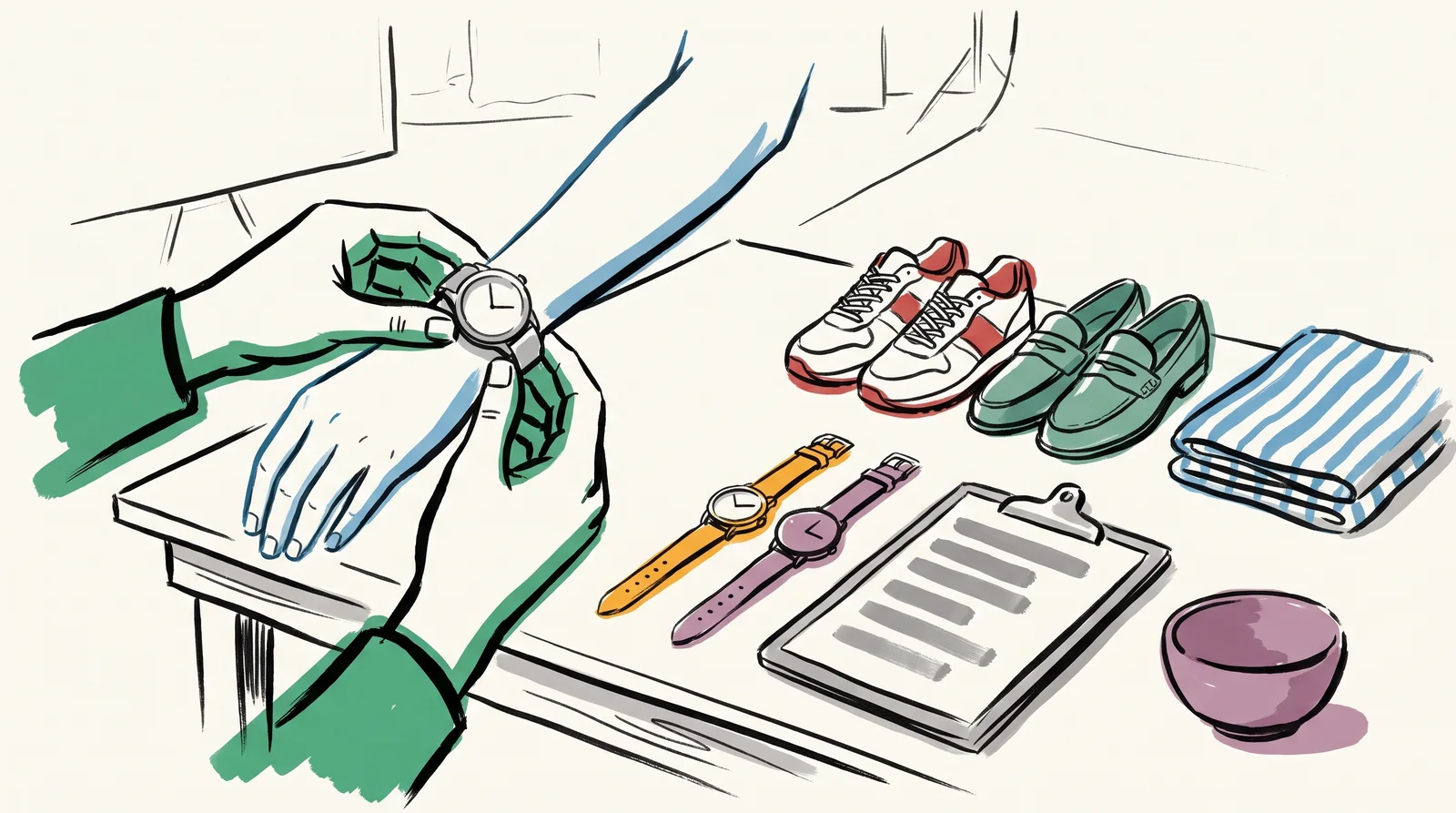
Styling makes a brand's world physical. The watch, the shoe, the bowl and the towel each say something about who this person is, and a viewer reads all of it without noticing. The commonest mistake is treating styling as shopping, done the day before by whoever is free. A frame styled that way is full of objects nobody chose on purpose, and they tell the viewer that nobody was paying attention. Hire a stylist even for a small shoot, and brief them as carefully as you brief the photographer.
The second mistake is deciding the looks on the day. Looks assembled on set produce an hour of deliberation while a crew stands still and a model waits in a robe, and the looks that come out of that hour are compromises. Skipping the fitting is the same mistake. It saves a morning in the week before and costs far more in shoot hours, because a garment that does not work on this body is then discovered at nine in the morning with everybody on the clock.
The third is treating the returns as somebody else's problem. Showrooms and press offices lend on trust and keep records, and a studio that sends things back late or marked stops being lent to, quietly and permanently. Photograph everything on arrival and departure. That record settles any argument about whether a mark was already there, and the stylist who keeps it is protecting your studio's name as much as their own.
The module takes the stylist's craft apart. It starts with building a look outward from the product, and with fit, the thing that most decides whether clothes look expensive on camera. It covers how colour behaves on a body, where borrowed things come from and how they go back, and the separate crafts of prop styling, food styling and hair and make-up. It ends with the fitting, with keeping everything the same across a long day, and with styling a model who has been generated instead of booked.
Elsewhere
- Type
- term
- Period
- ongoing