is the set of decisions about how the things a company sells relate to each other and to the company itself. Any business with a second product has one. It decides what a new product is called, whether it carries the parent's name, whose reputation takes the damage when something goes wrong, and what happens to a rival's name after you buy the rival. Few companies choose it on purpose. Most name things one product at a time, and find out years later that the names add up to a structure nobody decided on.
The standard map comes from David Aaker and Erich Joachimsthaler, who set it out in the California Management Review in 2000 and called it the brand relationship spectrum. At one end sits the , where one goes on everything and each product is named as a version of it. At the other end sits the , where every product has a name of its own and the parent stays out of sight. Between them are , which have their own name with the parent's signature underneath, and , which only make sense next to the parent's name. Real companies sit all along the line.
FedEx is the clean example of a branded house. In January 2000 the holding company, then called FDX Corporation, renamed itself FedEx Corporation, and two weeks later its ground parcel business RPS became FedEx Ground and Roberts Express became FedEx Custom Critical. One name now went on every truck, plane and uniform. Google names most of its products the same way, as Google Maps, Google Drive and Google Translate. The logic is cost. Each launch borrows the awareness the master brand has already paid for, so a new service starts life known.
Unilever and Procter & Gamble are the textbook houses of brands. A shopper can buy Dove soap and Hellmann's mayonnaise for years without learning that one company makes both, and Unilever is content with that. The separation pays off when a business is sold. In December 2017 Unilever agreed to sell its spreads business, including Flora, Rama and Blue Band, to the investment firm KKR for almost seven billion euros, and the brands could leave cleanly because nobody had been taught that Flora meant Unilever. That freedom has a price. Each of those brands had to build its own fame from nothing, and each keeps paying to hold on to it.
Most large companies are hybrids. The hard decisions sit in the middle of the spectrum. Marriott puts its own name under Courtyard, so the cheaper hotel borrows trust without being mistaken for the flagship. When Tata Motors bought Jaguar Land Rover from Ford in 2008, it left the Tata name off the cars, since people buying a Jaguar or a Range Rover are paying for those names and a new owner's name would add nothing to them. In August 2015 Google reorganised the other way round and put a new parent, Alphabet, above itself, so the search business kept the Google name while ventures far from search, such as Calico's work on ageing, sat beside it under names of their own. Larry Page wrote that the aim was a company that was cleaner and more accountable.
For a designer, this is the decision that sets the size of the job. A branded house needs one identity system that can stretch to forty product names without breaking, which means firm rules for how a product name sits beside the master mark. A house of brands needs forty identities, forty sets of guidelines and forty budgets. An endorsed structure needs a rule for how loud the parent is, anywhere between a small line on the back of a pack and equal billing on the front. A logo cannot settle any of it. A studio that starts drawing before the architecture is agreed usually ends up drawing everything twice.
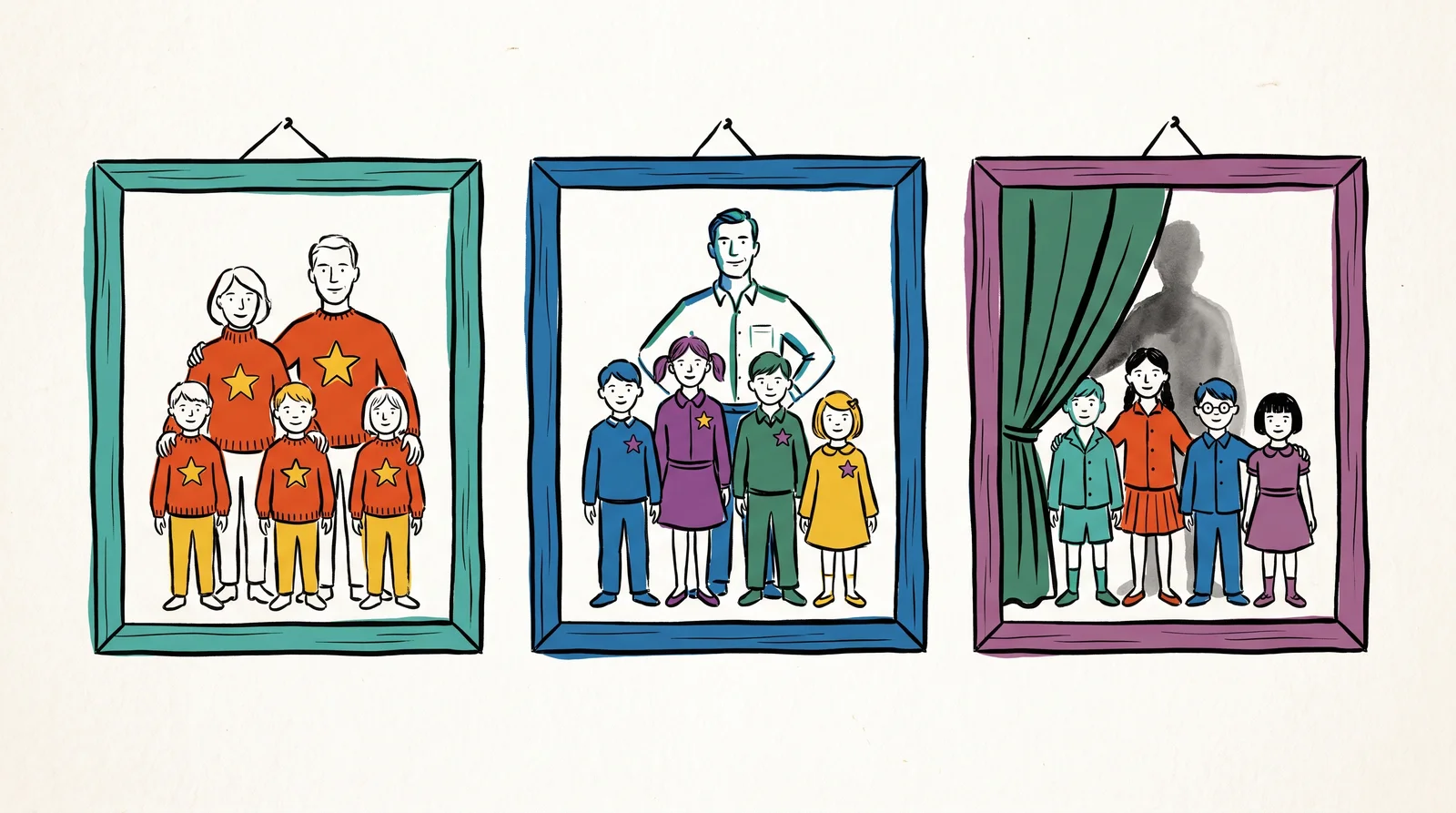
Side by side
Three positions on the spectrum, side by side
| Branded house | Endorsed brand | House of brands | |
|---|---|---|---|
| What the customer sees | The parent's name on everything, as in FedEx Express and FedEx Ground. | The product's own name, with the parent signing underneath, as in Courtyard by Marriott. | Only the product's name. Dove and Hellmann's are sold on their own names, not Unilever's. |
| What a launch costs | Least. The new product inherits the parent's fame on its first day. | In between. The name is new, and the parent lends it trust. | Most. Every brand builds its fame from nothing and pays to keep it. |
| When one product fails | The parent takes the damage. The Galaxy Note 7 recall was Samsung's news. | Some damage reaches the parent, in proportion to how loud the endorsement is. | Usually contained to one brand, which is part of why the structure exists. |
| Selling a business | Harder. The name stays with the seller, so the buyer has to borrow it for a while or rebuild. | Possible, with a period in which the parent's signature is phased out. | Clean. Unilever sold Flora and its other spreads to KKR in 2018 with the names intact. |
| What the designers make | One identity system, with strict rules for how product names sit with the master mark. | Separate identities, plus a rule for where the parent appears and how big. | A full identity, guidelines and budget for every brand. |
| Suits | Most small and growing companies, and any range customers see as one family. | New lines that need the parent's credibility and a personality of their own. | Portfolios aimed at different or opposed customers, and businesses that may one day be sold. |
The spectrum is David Aaker and Erich Joachimsthaler's, from the California Management Review in 2000. Sub-brands sit between the endorsed brand and the branded house, and are covered later in the module.
What to do it with
- ClaudeFree tier, paid above it
A language model that writes, edits, reads long documents and runs tools, including agents that work inside a codebase.
Bad at It is agreeable by default, so it will improve a bad idea instead of telling you it is bad. Ask it to argue against you and the quality of the answer changes.
- FigJamFree tier, paid above it
A whiteboard next to the design files, for workshops, maps and the argument before the work.
Bad at A workshop board is a record of a conversation, not a decision. Somebody still has to write the decision down.
The words, in plain language
- Brand architecture
- How the brands in a portfolio relate to each other and to the parent, as a customer meets them.
- Portfolio
- Everything the company sells, under whatever names.
- Master brand
- The parent name that appears across most of what a company sells. FedEx, Google, Virgin.
- Branded house
- One master brand on everything, with each product named as a version of it.
- House of brands
- Separate brands with a parent the customer barely sees. Unilever, Procter & Gamble.
- Endorsed brand
- A brand with its own name and identity, signed by a visible parent. Courtyard by Marriott.
- Sub-brand
- A name that leans on the parent's and cannot stand alone. Gillette Fusion is read as a Gillette.
Why it matters
Mistakes here cost money every year. A company with fourteen unrelated brand names pays to build awareness fourteen times, and most of those names will never earn it back. Procter & Gamble reached that conclusion at scale in August 2014, when its chief executive AG Lafley said it would keep 70 to 80 brands and sell or close up to 100 others. The brands it kept brought in about 90 per cent of its sales. Everything else had been a name to register, a pack to design and a budget to spend, for under a tenth of the business.
The opposite risk is contagion. When batteries in Samsung's Galaxy Note 7 began catching fire in 2016, the company recalled the phone, replaced it, then stopped making it altogether in October, and the headlines carried the Samsung name. A branded house accepts that trade, with one name to pay for and one name to damage. A house of brands keeps each problem in its own box, but a small company that copies Unilever's structure gets all of the cost and none of the scale that makes the cost bearable. For most businesses with a handful of products, the parent's name on everything is the better answer.
Three mistakes turn up again and again. The first is naming things one at a time, so the names imply a structure nobody decided. The second is giving a new name to something that only needed a description, which creates an asset the company must now defend, register and pay for in every market it enters. The third is drawing the company's own org chart and calling it the architecture, though customers never see the divisions. All three have one cheap fix. Write down the test a new product must pass before it earns its own name, and make every launch face it. A workable version asks whether the parent's name helps the product, whether the product would help or harm the parent, and whether there is a strong reason for a separate name, such as a different customer or a risk worth fencing off.
Each later lesson takes one decision. The module starts with the two ends of the spectrum and the case for each, then the middle ground of endorsed brands, sub-brands and plain descriptions. After that come naming systems for a whole range, what to do with a brand you have just bought, how to move customers from an old name to a new one, and components sold under their own name inside other companies' products. It closes on when a new brand is worth its cost, how to retire one well, and how to draw the whole structure on one page that a board can read.
Elsewhere
Links
- The Brand Relationship Spectrum, Aaker and Joachimsthaler (California Management Review, 2000)store.hbr.org
- Larry Page's letter announcing Alphabet (2015)abc.xyz
- Unilever to sell its spreads business to KKR (press release, 2017)live.euronext.com
- P&G to axe up to 100 brands (Marketing Week, 2014)marketingweek.com
- Type
- term
- Period
- ongoing