Brand psychology

Member lesson

Archetypes, and why the evidence is thinner than the decks suggest

Lesson 10 of 12 in Brand psychology.

Lesson

The twelve archetypes are among the most widely used frameworks in brand strategy and among the least supported. The underlying idea comes from Jung's theory of universal unconscious patterns, which is not a body of work with strong empirical support.
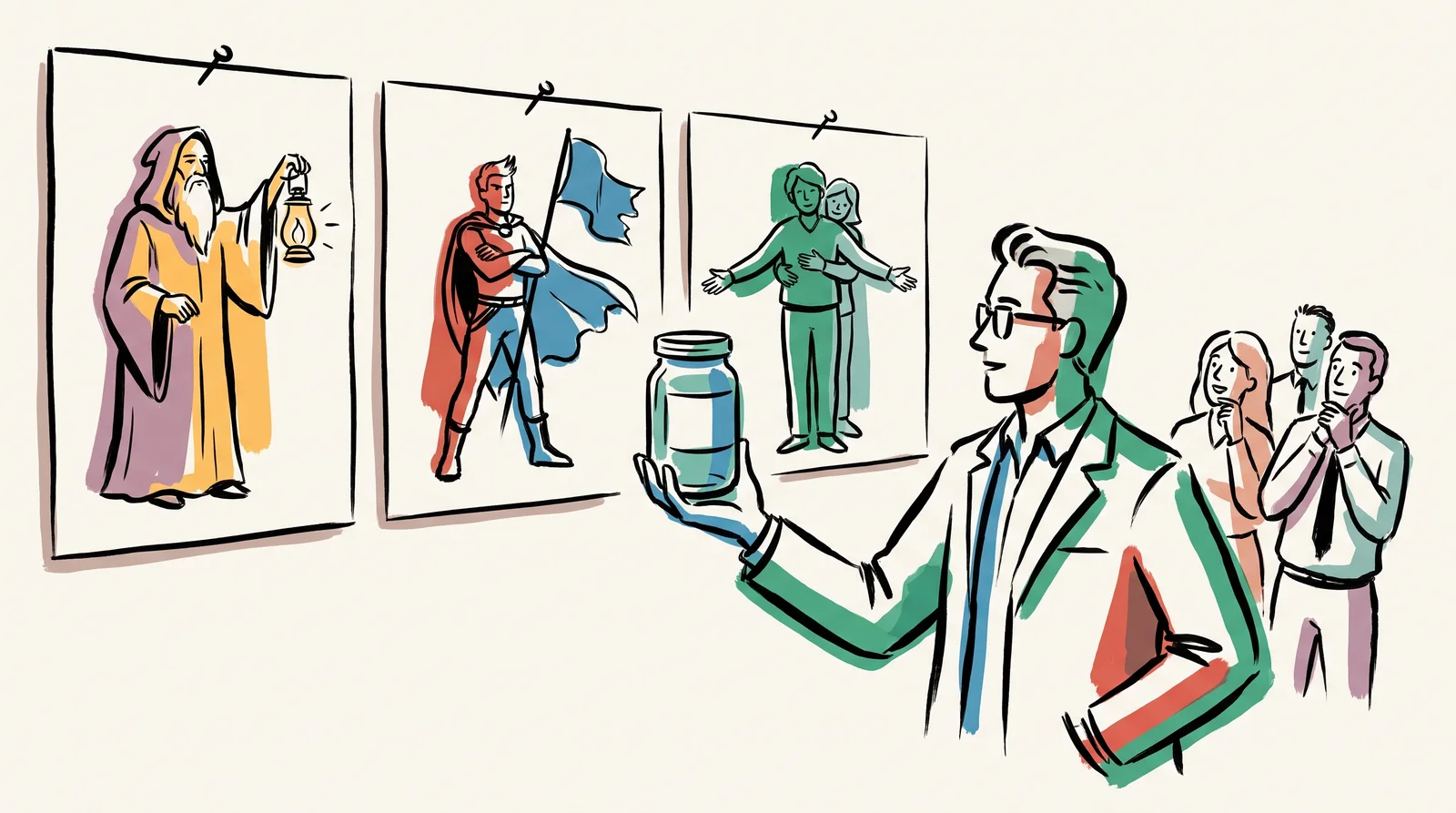
An ink drawing of a strategist holding a plain jam jar beside three character cards on a wall, a figure with a lamp, a rebel with a flag and a carer with open arms, while colleagues watch.
One plain jar seems to fit every archetype card equally well.
Member

The rest of this is for members.

You have read the opening of this lesson. The rest of it comes with a membership.

One membership covers all four courses and Brands.

  • All lessons in the four Learn courses
  • All brand breakdowns in the Brands section
  • All quizzes, flashcards and crosswords
  • An AI teacher on every lesson, for up to 60 questions a day
  • All course material published during the membership

Price

Membership is from $12 a month on the Yearly plan, which is charged at $144 once a year. Lifetime access is $59, paid once.Membership is from ₹200 a month on the Yearly plan, which is charged at ₹2,400 + GST once a year. Lifetime access is ₹3,999 + GST, paid once.

Check what stuck

Members only

You can't take this check yet.

Members answer these 3 questions and keep the ticket for this lesson. Every lesson has one.

  1. Question 1, locked

    Which of these words means this? “A character type a brand is said to embody: the Sage, the Rebel, the Carer.”

    • Retrieval
    • Cue
    • Brand archetype
    • Memory structure
  2. Question 2, locked

    Which of these words means this? “The idea's source, which was a theory of the unconscious rather than of marketing.”

    • Jungian origin
    • Legibility
    • Disfluency
    • Mere exposure
  3. Question 3, locked

    Which of these words means this? “Whether a framework could be shown to be wrong. Archetypes usually cannot.”

    • Falsifiability
    • Credibility gap
    • Astroturfing
    • Descriptive norm

Elsewhere in the library

Hear about new courses.

Leave an email and we will tell you when something new lands. We do not write often.