Generated images are very good at anything where nobody will measure the picture against a real object, such as worlds, mood, light, weather, places and moments that do not exist yet. They are weak wherever somebody will. That single test sorts almost every job you will be offered, and it is worth learning before any technique, because it decides whether a brief should be generated, photographed or built from both.
The first strength is worlds. The set, the scenery, the season or the interior around a product can be shown in minutes, well enough for a room of people to agree on it, long before anything is built or booked. These are , images made to settle an argument rather than to be published. A campaign that cannot decide between a pale oak Scandinavian kitchen, a 1970s kitchen in brown tile and a small Mumbai apartment kitchen can see all three by lunchtime, and choose one before anybody pays a location fee or a set builder. Nobody publishes those frames, but the decision they produced shapes everything that follows.
The second strength is , which film crews and advertising agencies practised for decades with storyboards and rough animatics before any of this existed. A shot list written as six frames, with the light, the surface and the camera height decided, can be generated for well under a dollar and laid out on one page. Walking into a pitch with the campaign already visible removes the part of the process where a client approves words and then dislikes pictures. The shoot still happens. It happens against an agreed image, and the changes people would have made on the day, to the crop, the props or the time of day, have already been made for nothing.
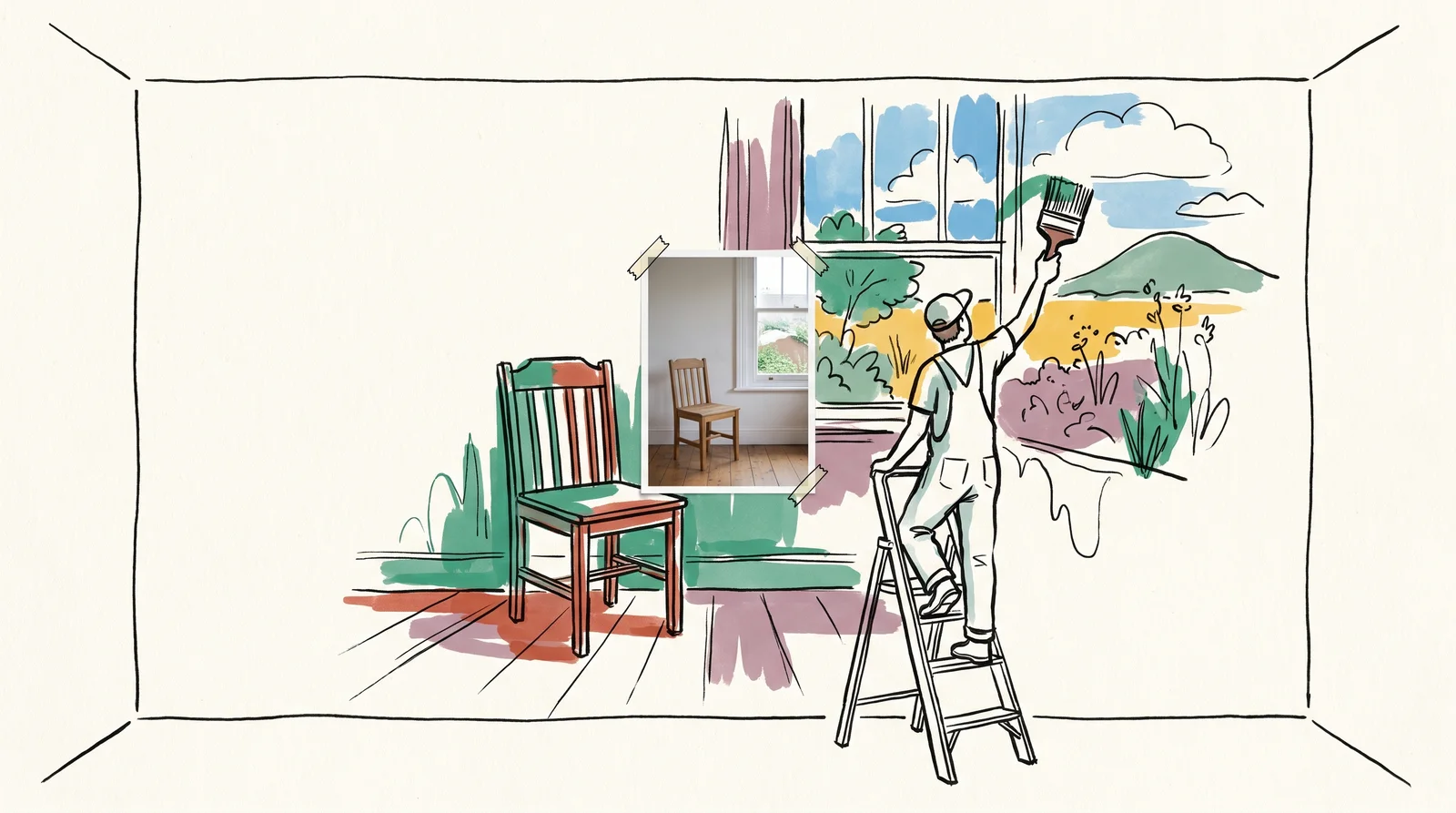
The third is the unglamorous middle of a real production. The jobs are extending a background, filling a , building a surface and replacing the sky that was grey on the day, and none of them is the , yet all of them used to take a retoucher hours. Film has done this since 1907. That year Norman Dawn painted crumbling California missions on glass for a film called Missions of California, the first known matte painting shot, and has been part of the craft ever since. Growing a real photograph outwards is now one of the most reliable things a model does, because the real photograph has already fixed the light and the perspective before the model adds anything.
The fourth is volume, once an idea is agreed. Forty versions of an approved image, cut for a story, a banner, a poster and a product page, in different markets and seasons, used to be forty days of work and can now be an afternoon of generating and an evening of choosing. The order matters here. Volume before an agreed idea gives you forty versions of nothing in particular, and choosing among them becomes the whole job; volume after it gives you a family that holds together, because each image answers the same brief.
The weak list is just as stable. A later lesson takes it apart in detail, but you should know its shape from the start. Generated images fail at exact reproduction of a specific object, which in commercial work means your client's actual product, and they fail at small legible text, at hands where they touch something, at reflections that agree with the room, at counting and at holding the same face from one picture to the next. Every item on that list is something a viewer can check against reality. So the rule this course works to is that the thing being sold is photographed or modelled, then composited into a generated world, and only the world is invented.
Try this
Previs next month's shoot for about $0.40
Take a real shoot you have coming up and write its shot list as six frames, one line each, with the light, the surface and the camera height decided. Generate each frame once on gemini-3.1-flash-image at 1K, lay the six out on one page, and show the page to the client or the photographer before anything is booked.
Time: An hour, most of it writing. You need: A shoot that has not happened yet, Google AI Studio in a browser, or a Gemini key, which the Accounts, keys and money module sets up later in the course.
Look for
- Which decisions people change once they see them, such as the crop, the props or the time of day. Each is a change you did not pay for on the day.
- Gaps the model filled with its own average, wherever your line left something undecided.
- The product itself, which will drift. That is fine for previs, and a plain sign these frames are not finals.
- How long the conversation takes compared with the last time you presented a mood board of found images.
The words, in plain language
- Concept frame
- An image made to settle an argument rather than to be published.
- Previsualisation
- Seeing the shoot before booking it. Cheap now, and it changes what gets approved.
- Plate
- A real photograph used as the base that generated material is added to or extended from.
- Set extension
- Growing a real photograph outwards. One of the most reliable uses there is.
- Variation at volume
- Forty versions of an agreed idea, which used to be forty days.
- Hero image
- The one picture a campaign leads with, usually of the product. The riskiest thing to generate.
- Compositing
- Placing a photographed product into a generated scene and matching its light, shadow and grain.
Why it matters
The strong list decides what you sell. A studio that offers generated hero product shots is fighting the tool's weakest area; a studio that offers forty on-brand lifestyle worlds by Thursday is selling exactly what the tool does best, at a price nobody could have quoted three years ago. The first will spend its margin regenerating and retouching frames the client rejects, while the second spends its time choosing between good ones.
The costly mistakes all come from putting work on the wrong list. Generating the product instead of photographing it produces a convincing relative of the product, with a label that is nearly right and a cap that is slightly the wrong shape, and in food, cosmetics, medicine or finance that can breach rules about depicting a product accurately. Presenting previs frames as finals sets an expectation the shoot then has to match. Generating at volume before the idea is agreed spends a day of budget producing choices nobody asked for. Each mistake looks cheap at first. At a few cents an image the generating costs almost nothing, and the real expense arrives later, in the hours spent explaining the wrong pictures to a client who expected the right ones.
The category where this is transformative rather than helpful is the small brand. A founder with one product photograph and no budget can now have a coherent visual world, and that was simply not available at any price they could pay. Their one photograph carries the product. The generated world does everything else, and a designer who knows both lists can build that world without ever putting the product at risk.
The rest of this module turns the strong list into a working method and keeps the weak list in view. It covers the failures in detail, how to pick a model for a particular job, and why a reference image steers better than any description. Then come the controls. Composition, depth, pose and edges each get a lesson, as do repainting part of a picture and extending it past its frame, and the middle lessons keep a face and a product steady across a series and look at what enlarging does to detail. The module closes on making a series look like one shoot, the finishing no model replaces, and the small signs that give a generated image away. Some words arrive before their explanation. Adapter, seed and latent space are explained in the next two modules, How the machines work and The vocabulary, so read those first if you would rather have the terms before the practice.
Elsewhere
- Type
- term
- Period
- ongoing